Route every payment using business rules. Auto-clear the routine, escalate the exceptions, and give approvers the context to decide fast.
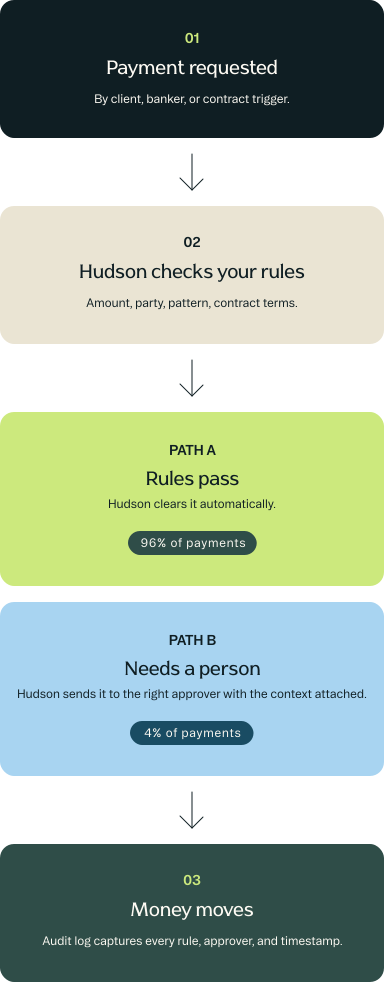
Hudson checks every payment against your rules before it moves. Routine payments clear on their own. Anything that needs a second look goes to the right approver with full context. Every decision lands in the audit trail.
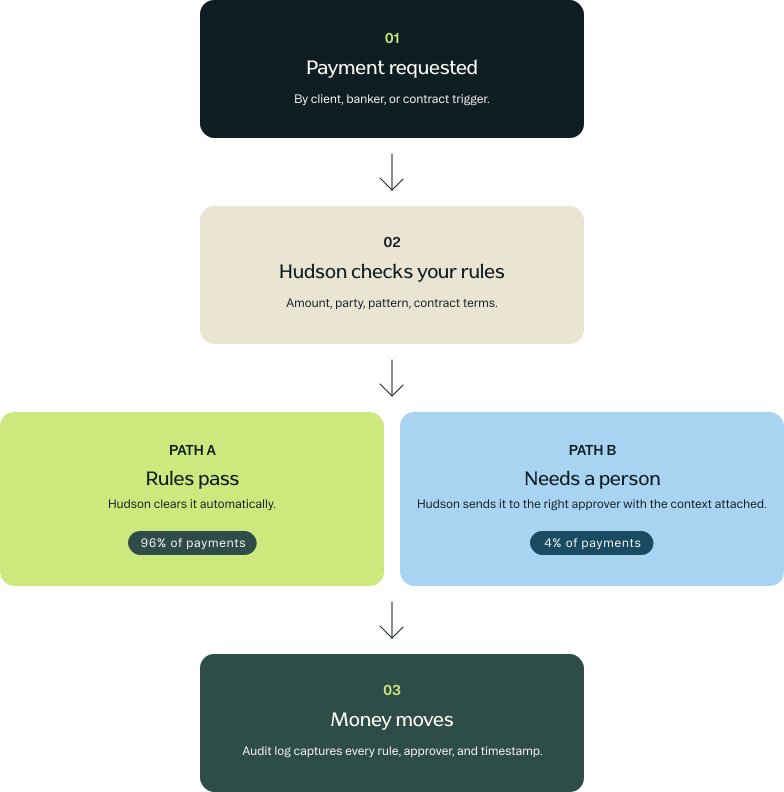
So the right approval fires on the right transaction, every time.
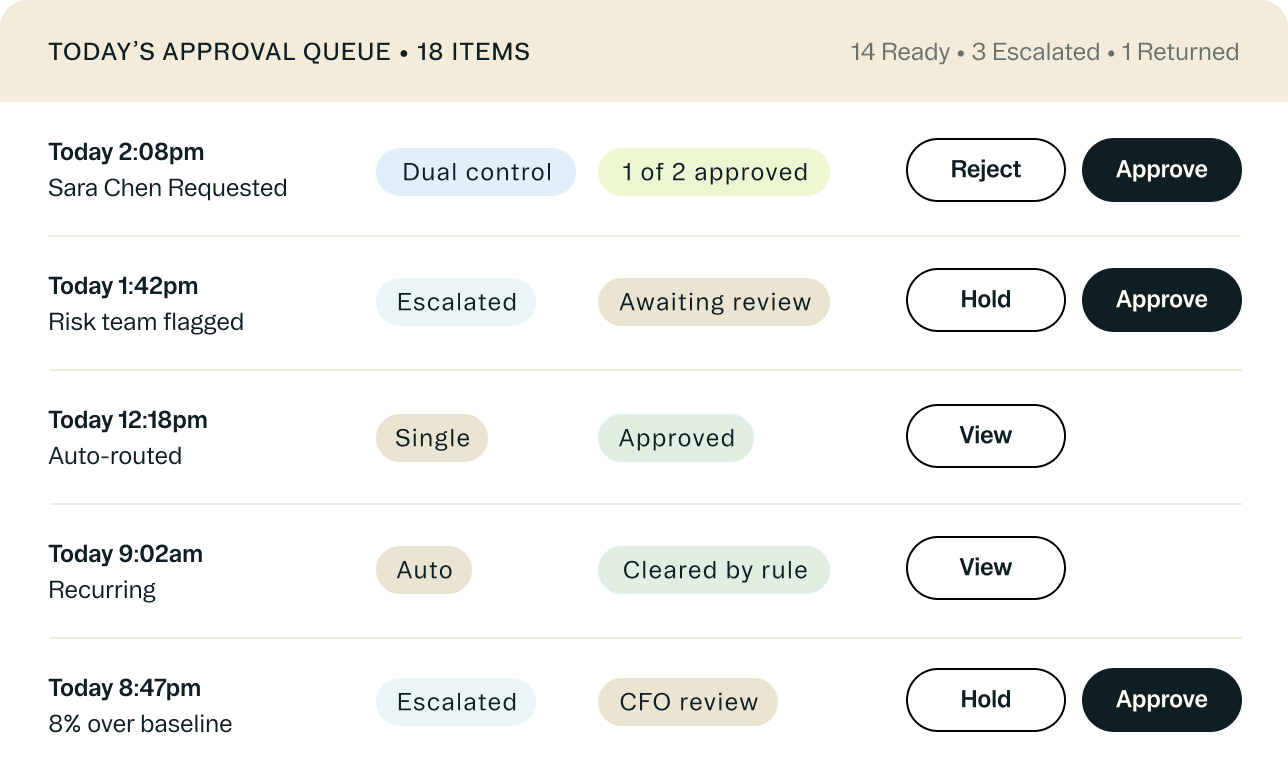
A typical email inbox buries the few decisions that matter under routine noise. Hudson filters decisions to only what your policy flags, each item presented with the full context to disposition in one click.

What usually triggers a second look.
This contract has averaged $12,400 per draw across nine prior payments. Today's request is nearly 7× that.
You've paid Riverside Vendor twelve times, always to the same account. Today's payment routes to one Hudson hasn't seen before.
This creditor drafts on the 1st of every month over the last 24 months. A mid-month draft request is unusual.
Acme Vendor was paid at 9:02am. Two more requests for this payee landed at 10:14am and 11:42am, both for the same amount.
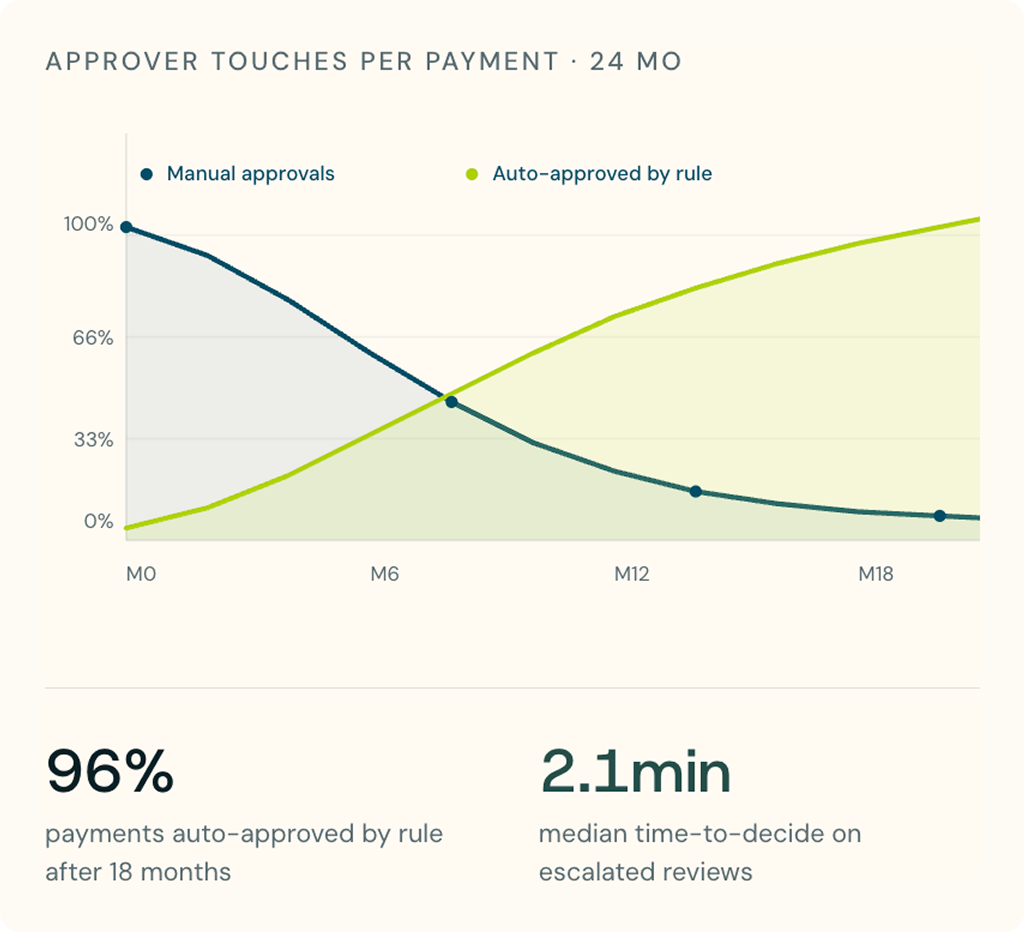
When every payment hits the same approval chain, reviewers rubber-stamp everything, including the ones that should have gotten a second look. At scale, Hudson clears over 95% automatically and only escalates exceptions. The payments that require judgment, actually get it.

One approval engine that enforces your policies and keeps a tight audit trail of decisions.
Yes. Different transaction types get different chains, with the approvers, thresholds, and sequences.
Escalation timeouts kick in. If an approval sits too long, Hudson escalates to the next in sequence automatically.
Thresholds are configurable, so any transaction over an amount you set requires an additional or more senior approver.
Both. Steps can run sequentially, where one gates the next, or in parallel, where several approvers act at once.
We configure the rules during onboarding. Hudson runs every payment against the thresholds and patterns, clears what matches policy, and routes only the exceptions to the named approver.